
Underground Water Leak Detection in Mansfield, TX
There's a leak somewhere underground, and you need it found before anyone starts digging. Underground water leak detection locates buried pipe leaks under lawns, driveways, patios and landscaping, so excavation happens in one place.
- Buried pipe leaks located
- Under soil, concrete or landscaping
- One dig, at the marked spot
- 1Call or send the form
- 2We locate the leak
- 3You get the spot & repair options
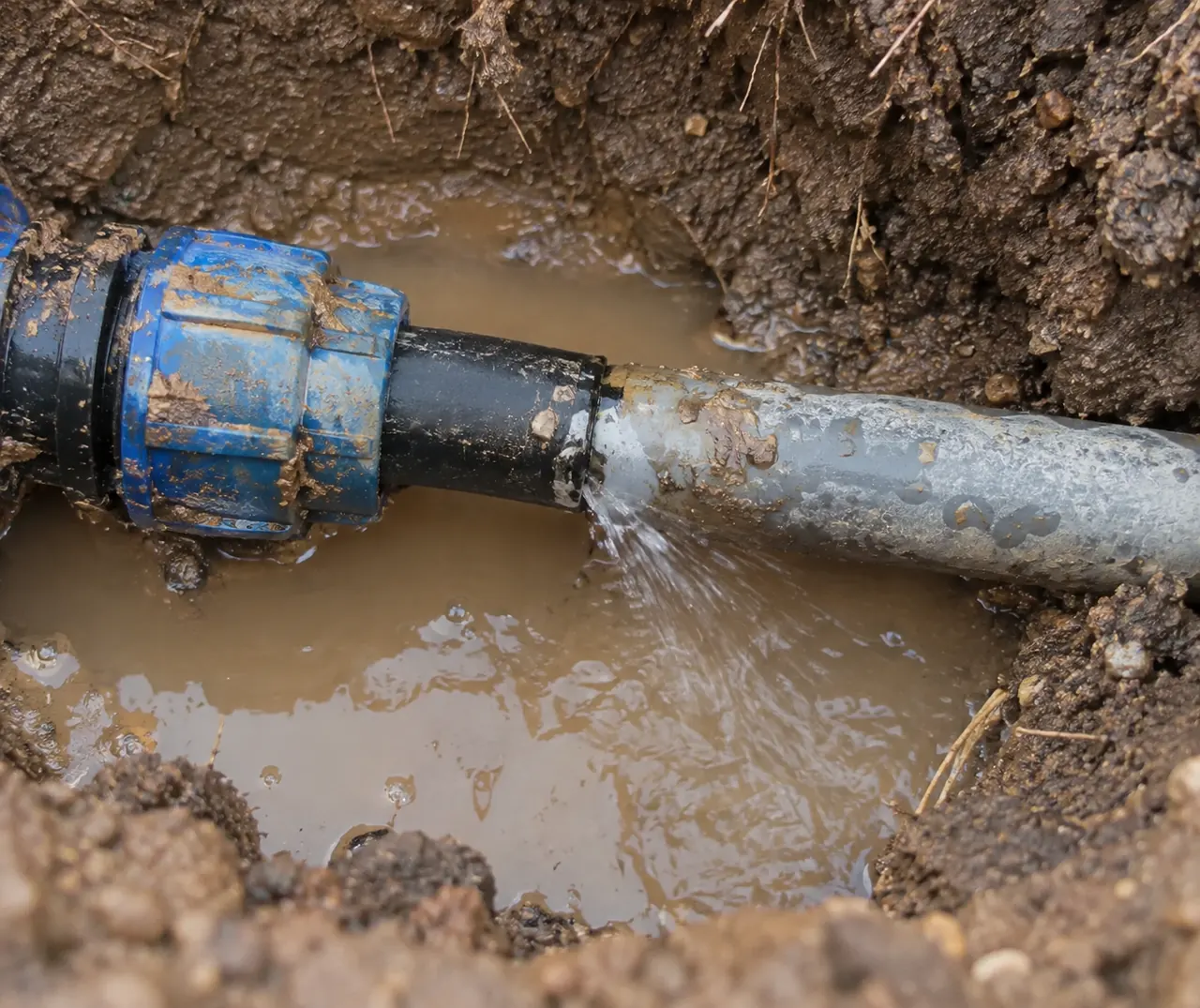
Signs of an underground water leak
- Soggy or soft groundA patch that stays wet days after rain or watering.
- Extra-green stripGrass greener along a line, especially in a dry spell.
- Sinking or settlingA dip in the lawn, a sunken paver or a new crack in a driveway or walk.
- Water at the surfaceBubbling or pooling where no sprinkler is running.
- Unexplained water lossThe meter moves with all fixtures and irrigation off.
- Pressure changesLower pressure across the house, or sputtering at outdoor faucets.
Which buried pipe is leaking?
An underground water leak is a location problem first. Most residential properties have several buried pipes, and the first job is working out which one is leaking:
- The water service line from the meter to the house, which is pressurized all the time
- The irrigation mainline, zone valves and lateral lines
- Lines to outdoor faucets, outbuildings, a detached garage or a shop
- Pool and spa plumbing between the equipment pad and the pool
Isolation sorts it out. Closing the house shutoff and turning off the irrigation backflow or master valve shows whether the leak is on the service line, the irrigation, or a branch line.
Buried lines cross the yard between the meter, the house, irrigation and the pool. The wet spot on the surface is often not right above the leak.
How the surface changes the detection method
"We use advanced technology" doesn't tell you much. What matters is that the method has to suit what's on top of the pipe:
| Above the pipe | What works well | Why |
|---|---|---|
| Lawn and soil | Ground microphones, line tracing, tracer gas | Soil carries leak sound reasonably well, and gas rises through it |
| Concrete driveway or patio | Acoustic listening on the slab, pressure isolation | Concrete transmits sound well, which helps pinpoint before saw-cutting |
| Pavers or rock | Acoustic listening, tracer gas through the joints | Gaps let gas escape where it can be detected |
| Landscaping beds and tree roots | Line locating first, then acoustic and tracer gas | Roots and mulch dampen sound, and the pipe route is often unknown |
| Saturated clay | Tracer gas, careful acoustic work | Wet clay absorbs sound, so the loudest spot may be off the leak |
Underground leak detection methods
Pipe and line locating comes first when the route is unknown. A tracer signal or sonde maps where the pipe actually runs, which is often not a straight line from A to B.
Acoustic leak detection uses ground microphones along the mapped route. Pressurized water escaping makes a sound that peaks closest to the leak.
Tracer gas is introduced into a drained line. It escapes at the leak and rises through soil or concrete joints, where a detector picks it up.
Pressure testing confirms that a specific buried section is leaking, and confirms the repair holds afterward.
What excavation should look like after location
When the leak has been properly located, the dig should be one access hole at the marked spot, not a trench following the pipe. In Mansfield's clay, that also means less disturbed soil to settle later.
Before anyone digs, call 811 so public utility lines are marked. 811 doesn't mark private lines like your service line or irrigation, which is another reason the private pipe route should be traced during detection.
Frequently asked questions
How do you find a water leak underground?
First by isolating which buried line is leaking, then by mapping its route and pinpointing the leak with acoustic listening, tracer gas and pressure testing. The leak is marked on the surface for a single dig.
Why isn't the wet spot right above the leak?
Water follows the path of least resistance: along the pipe trench, through looser backfill or down a slope. It can surface some distance from the actual break.
Is an underground leak my responsibility or the city's?
In Mansfield, the city owns the meter. Buried pipes on the property side of the meter are the owner's responsibility. Leaks on the city side, or at the meter itself, should be reported to Mansfield Water Utilities at 817-276-4230, or 817-473-8411 after hours.
Can you find a leak under my driveway?
Yes. Concrete carries leak sound well, and pressure isolation confirms the section. Locating it precisely keeps saw-cutting to a small area.
Do I need to call 811 before digging?
Yes. Call 811 before any excavation so public utilities are marked. 811 does not mark private lines on your property, such as the service line from the meter or irrigation.
Could it just be the sprinkler system?
Often, yes. Turn the irrigation off at the backflow device or controller and repeat the meter test. If the meter stops moving, the leak is in the irrigation system.
Related leak detection services
- Water Service Line Leak DetectionThe private line from the city meter to your house: pressure loss, soggy yard, meter spinning.View service
- Irrigation & Sprinkler Leak DetectionSprinkler mainlines, zone valves and laterals leaking underground or between cycles.View service
- Slab Leak DetectionSupply-line leaks under a concrete slab foundation: warm floor spots, running-water sounds.View service
- Water Meter & High Water Bill Leak DetectionUnexplained high bills and a meter that moves with everything off, traced to the source.View service
- Pool & Spa Leak DetectionWater loss beyond evaporation: pool plumbing, skimmers, returns, main drains and spas.View service
- All leak detection in MansfieldEvery leak type we locate, and a symptom matcher to find yours.Go to homepage
Get the leak located before anything gets opened up
Call and describe what you're seeing, or send the short form at the top of this page. You'll get a clear next step either way.
- Have a recent water bill handy
- Note when you first noticed it
- Water spreading? Close the house valve first